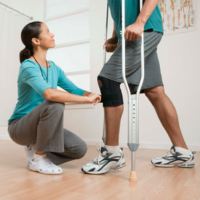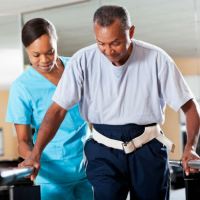

A bachelor’s degree in Athletic Training will prepare you for a career as an athletic trainer. Advanced degrees in this field offer trainers even more career opportunities.
What is an Athletic Trainer?
The ATC or Certified Athletic Trainer is a highly skilled allied health care professional who utilizes their advanced education in the rehabilitation and treatment of injuries acquired by very physically active individuals. They also specialize in the assessment and prevention of injury management. The ATC will work in tandem with other healthcare professionals who can include Registered Nurses, Occupational Therapists and Physical Therapists, all of whom are under the direct supervision of a direct care physician. The Athletic Trainer will very often be the first contact for high schools, college level sports programs, clinics specializing in sports medicine, as well as for professional sports teams, offering readily available healthcare services that are an often integral part of any athletic program. Depending on the level of athletic competition, the daily schedule of a Certified Athletic Trainer can vary greatly.
What does an Athletic Trainer do?
Depending on the job description as set forth by the employer and/or the academic institution, the responsibilities will most always include focus on areas of injury prevention by working with the coaches and athletes through employing effective strength training techniques, successful conditioning methods and proper nutrition counseling. Knowledge and efficient use of bandages, tapes, braces and other safety protocol is essential to the ATC’s daily tasks of managing existing injuries, and the ability to determine when the need to consult a physician is crucial. After which time, the ATC is often responsible for coordinating the continuous communication between all parties involved, including the physician, parents, coaches, and the team member himself to assist in the timely healing of the athlete’s injuries. The Trainer will also help to best establish the proper time for the competitor’s safe return to active participation in their sporting events.
Because the ATC is so well rounded with a very diverse background of specialized patient care services, they can be found in many other areas of the healthcare profession. They can be found working alongside physicians in the office or hospital environment, in clinics of physical therapy, in service to the military, and even in areas of the performing arts. A Certified Athletic Trainer can utilize their education and skills in injury prevention, maintenance, rehabilitation, and emergent care not only to various levels of sports team members, but to any individual who has a very physically active lifestyle. The Professional ATC can have a long and varied career by gaining knowledge and expertise in the factors that influence effective injury treatment and can often be influential in the design and implementation of these types of programs by honing their skills in the medical, exercise and sports sciences.
Preparing for a career In Athletic Training
A minimum of a bachelor’s degree specializing in Athletic Training from a Commission on Accreditation of Athletic Training Education (CAATE) accredited college or university is a prerequisite to a career in this field.
Course work for the scholar attaining a Certified Athletic Training education will include nutrition, exercise physiology, anatomy and physiology, psychology, as well as human biomechanics. Students will have many opportunities to develop advanced psychomotor skills by working under the direct supervision of a clinical instructor, often participating in a wide array of extensive physical educational practices. Once the academic degree is achieved, the next step on the path to a career in the field of Athletic Training will be to pass the Board of Certification (BOC) examination. This is a requirement if the graduate wishes to use the degreed ATC Credentials in a professional environment. The exam is focused into five major categories:
- Injury/Illness Prevention and Wellness Protection
- Clinical Evaluation and Diagnosis
- Immediate and Emergency Care
- Treatment and Rehabilitation
- Organization and Professional Health and Well Being
While the BOC’s ATC credential is currently recognized by 47 states in the nation, each state has their own individual criteria and regulations. It is recommended that the graduates contact the state in which they wish to become employed to determine its specific practice laws and requirements.
Get related job experience before deciding on an Athletic Training degree
The Certified Athletic Trainer can be found in many diverse areas of specialty. Because of this, those who are interested in pursuing this career many want to consider gaining additional expertise in this field by acquiring work experience that involves sporting activities, weight training services, youth sports camps, physical therapy clinics, and in physicians’ offices specializing in sports medicine. The high school student can prepare in advance for his college education by taking courses in chemistry, biology, physics, anatomy and physiology, physical education, extracurricular sports teams, first aid, and CPR. Volunteer work in local hospitals, sporting clinics, and school athletic training rooms can also be extremely beneficial.
Job opportunities for those with an Athletic Training degree
Once the graduate has earned their degree and successfully completed the BOC Exam with a passing score, a successful ATC will have many full time and part time opportunities for employment, not just in school athletic programs, but in a whole host of other genres. According to the National Athletic Trainers Association, today, more than 50% of its membership is employed in positions that fall outside the realm of “traditional” school athletics. The Certified Athletic Trainer is recognized by the American Medical Association as an allied healthcare provider and is therefore in great demand. Employment opportunities are growing exponentially as industries in allied health care systems identify and become more aware of the multiple skills and talents possessed by the ATC. The Certified Athletic Trainer will have options of employment that include not just employment in doctors’ offices, hospitals, sports medicine and physical therapy clinics, but a wide range of additional outreach programs as well as professional occupations in an array of industrial settings.